
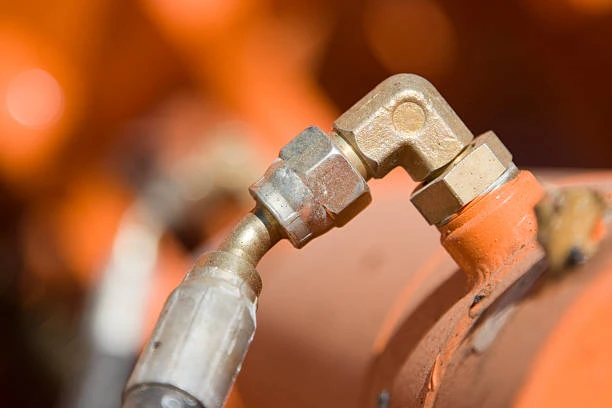
In modern piping systems, PEX (cross-linked polyethylene) tubing is widely used due to its exceptional flexibility, temperature resistance, and corrosion resistance. As a core connection technology, PEX compression fittings are highly favored in residential renovations. Commercial buildings, and certain industrial sectors for their ease of installation. Reliability, and durability—all without the need for specialized heat-fusion tools. The creation of high-quality compression fittings is far more than simple metalworking; it is a systematic process integrating materials science. Precision mechanical engineering, and rigorous quality control. This article provides an in-depth analysis of the key manufacturing technologies involved, from raw materials to the finished product.
I. The Importance of Material Properties
The performance foundation of PEX compression fittings lies in the selection and composition of raw materials. Vast majority of high-end PEX compression fittings utilize forged brass (such as CW617N or similar grades) as the primary material. Compared to cast brass, the forging process yields a denser and more uniform metal grain structure. Resulting in three core advantages: superior mechanical and tensile strength, enabling the fitting to withstand higher system pressures and water hammer shocks while ensuring long-term structural integrity. Excellent ductility and toughness, preventing cracking during compression and facilitating a superior seal. And outstanding corrosion resistance, where the dense structure minimizes microscopic porosity, effectively resisting corrosive agents such as chloride ions found in water. Raw materials must comply with safety standards for drinking water. Such as low-lead (e.g., LF certification) or non-toxic (e.g., NSF/ANSI 61 certification) requirements.
II. The Compression Ring
Typically manufactured from a harder copper alloy with excellent elasticity (such as H62 brass) or a specialized stainless steel, the compression ring is a critical component. Its tapered design and precise geometric dimensions are essential for creating a permanent mechanical seal. Upon compression, it must undergo controlled plastic deformation while retaining sufficient spring-back force to compensate for cold flow or minor dimensional changes in the PEX tubing. Similarly, the nut—also made of forged brass—relies on thread precision, strength, and fit with the fitting body to directly determine the effective transmission of compression force and the tactile feel during installation. Before entering the production line, all raw metal materials undergo rigorous spectral analysis to verify their chemical composition, alongside preliminary inspections for hardness and dimensional tolerances.
III. Core Production Process
The production stages are intricately linked, with each step determining the quality of the final product. Brass rod stock is forged using precision multi-station cold-heading machines. At room temperature, immense pressure is applied via dies to force the metal to flow within the die cavity, creating near-net-shape blanks for components such as the main body and nuts. This process ensures high material utilization and continuous grain flow, thereby enhancing the mechanical properties of the parts. The precision of die design and manufacturing is the heart of this stage.
IV. CNC Machining
Forged blanks are transferred to multi-axis CNC lathes or turn-mill centers for precision machining. This is the critical stage where functional dimensions and the final appearance are established: Turning: Precision machining of the inner and outer sockets for PEX pipe connections, sealing conical surfaces, the bevels that interface with compression rings, and the hexagonal heads for wrench installation. Tapping: Cutting high-precision pipe threads (such as BSP or NPT) into the locking nuts and main bodies. Thread precision, surface finish, and perpendicularity are paramount; high-quality taps and in-line inspection systems are employed.
Drilling/Milling: Machining internal flow channels to ensure smooth water flow and minimize pressure loss. Deburring and Surface Treatment: To ensure safety and aesthetics, machined parts undergo thorough deburring—using methods such as vibratory finishing, magnetic grinding, or manual refinement—to remove sharp edges and metal chips that could scratch PEX pipes or compromise the seal. Subsequent cleaning and polishing create a smooth surface, preparing the parts for electroplating.
Conclusion: The Art of Connection Driven by Technology
The production technology for PEX compression fittings represents a perfect fusion of traditional metalworking processes and modern quality control principles. From molecular-level strengthening during forging and micron-level precision machining to the creation of nano-scale electroplated protective layers, every step embodies an unwavering commitment to reliability, safety, and ease of use. With advancements in materials science—such as more eco-friendly coating technologies—and the introduction of smart manufacturing (including automated visual inspection and big data-driven process monitoring), the production technology for PEX compression fittings will continue to evolve, delivering safer, more durable, and smarter connection solutions for global piping systems.
Kontakt
IFAN ist ein professioneller Hersteller mit 30 Jahren Erfahrung, der sich der Herstellung hochwertiger Kunststoffrohre, -armaturen und -ventile verschrieben hat. Zu unseren Produkten gehören Messingventile, PPR-Ventile sowie verschiedene Rohre und Armaturen, um den unterschiedlichen Kundenanforderungen gerecht zu werden. Ob Sie Sanitär- und Abflussrohre oder Ventilprodukte benötigen, IFAN kann Ihnen eine breite Palette hochwertiger, kostengünstiger Produkte zur Unterstützung Ihrer Projekte anbieten. Nachfolgend finden Sie unsere Kontaktinformationen.
Wir werden Ihre E-Mail oder Ihr Fax innerhalb von 24 Stunden beantworten.
Sie können uns jederzeit anrufen, wenn Sie Fragen zu unserer Produktion haben.
Bitte mailen Sie an:E-Mail: [email protected]
WhatsApp: +86 152 1588 7738